Ask most people when to sail in Greece and they will say July or August. Ask the instructors and the answer is October — almost without hesitation. There is something about this month that the brochures do not quite capture, and that the summer crowds never get to experience. The Aegean in October is a different place from the Aegean in August, and for sailors who know what they are looking for, it is frequently the better one.
This is not a contrarian argument for the sake of it. It is an honest account of what October sailing in the Aegean is actually like, written from the perspective of people who have been on the water here every season for over a decade.
The Crowds Are Gone
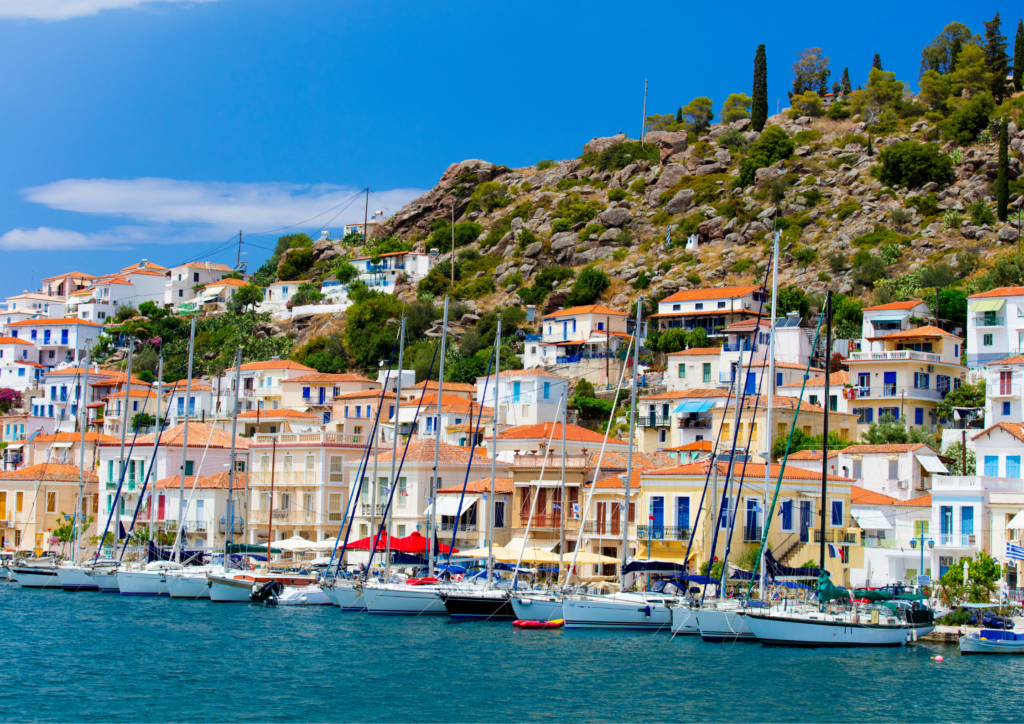
By the first week of October, the transformation is already underway. The charter fleets are thinning. The harbour villages that were standing-room-only in August have their quays back. You can arrive at Hydra at midday and find space on the town quay. You can anchor in a bay that had thirty boats in it six weeks ago and be entirely alone.
This changes the experience of sailing in a way that is difficult to overstate. Passage planning becomes simpler when you are not competing for berths. Anchoring becomes more relaxed when you are not threading between a flotilla and three charter catamarans. The islands themselves — their villages, their restaurants, their waterfront tavernas — return to something closer to their actual selves rather than the performance version they put on for August.
The locals notice you differently in October. You are not one of a thousand visitors; you are one of a few dozen people who chose to be here now. That distinction matters in small Greek island communities, and it shows in the quality of the welcome.
The Light
Photographers talk about the golden hour. In the Aegean in October, the golden hour lasts most of the afternoon. The sun is lower, the light is warmer, and the quality of it on the water — on the white houses, on the volcanic rock, on the sails — is extraordinary in a way that the flat overhead glare of August is not.
This is not a small thing for people who sail because they find the sea beautiful. October mornings in the Saronic are among the finest visual experiences the Mediterranean has to offer. The visibility is exceptional — the haze that sits over the Aegean in the height of summer has lifted — and on a clear day you can see distances that feel improbable.
The Sea Temperature
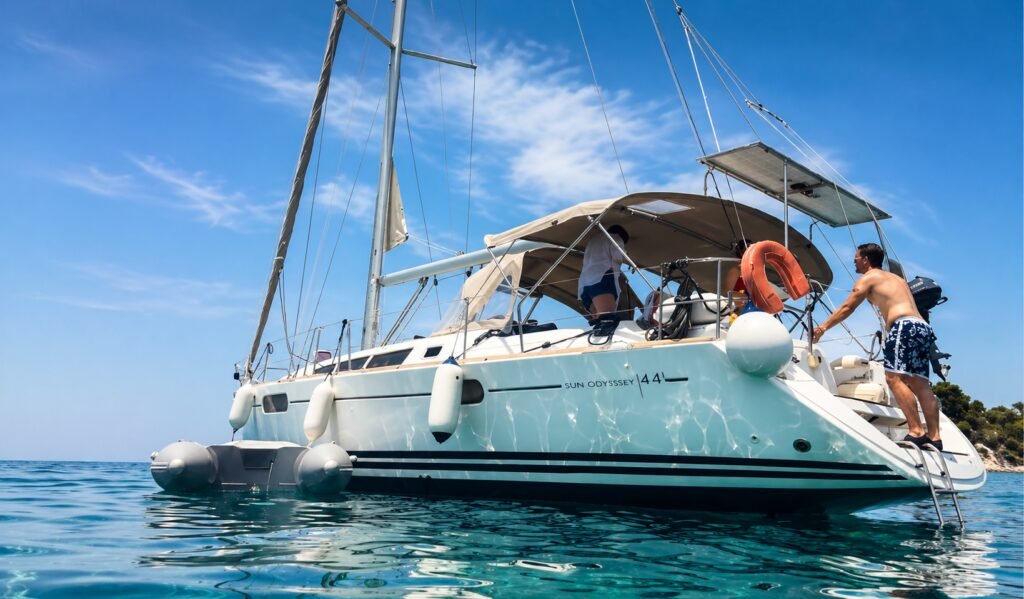
The Aegean takes months to warm up and months to cool down. By October it has been absorbing heat since April and the sea temperature sits at 22 to 23°C — warmer than the English Channel in July, warmer than most Atlantic coastal waters ever get. Swimming off the back of the boat in October in Greece is not an act of bravado. It is genuinely pleasant, and it is one of those things that surprises first-time October visitors every time.
The air temperature in early October reaches 24 to 26°C by midday. Evenings cool to 18 to 20°C — warm enough for dinner outside, cool enough to finally feel comfortable after the relentless heat of summer. For sailing, this is close to ideal: you are not fighting the heat on deck, you are not layering up against cold, you are simply comfortable.
The Wind
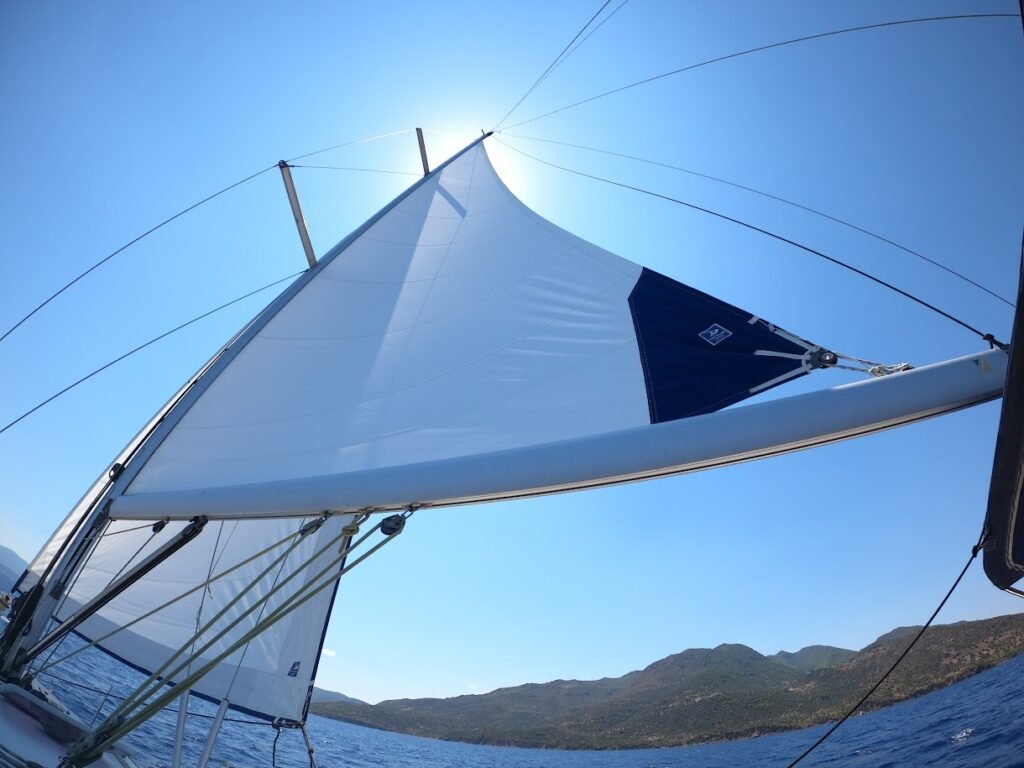
The Meltemi — the dominant northerly that defines Aegean sailing from June through August — fades in October. What replaces it is more variable and, for sailors with some experience, more interesting. October brings a mix of light northerlies, occasional southerlies ahead of frontal systems, and the kind of changeable conditions that require actual weather reading and passage planning rather than simply setting a course and holding it.
This variability is precisely why October suits experienced sailors and advanced students so well. A Coastal Skipper candidate who trains in October develops a genuine feel for meteorology that a July course — with its reliable Meltemi blowing day after day — simply cannot replicate. Reading a barograph, interpreting a changing forecast, making the call to stay in harbour or push on: these are the decisions that build real seamanship, and October provides them consistently.
There will be unsettled days. A front moving through the Aegean in October can bring 25 to 30 knots and a short steep sea. These days are not dangerous for a properly handled yacht with a competent crew — but they are demanding, and they are educational in a way that flat-water summer sailing is not. The fine days in between, which are many, feel earned.
What the Islands Are Like
Hydra in October is the island that Hydra actually is, rather than the island it becomes under the weight of August tourism. The waterfront is quieter. The donkeys move more freely. The restaurants are run by people who have time to talk to you. The hiking paths that were jammed in summer are empty.
Spetses retains its warmth well into October — it is the southernmost of the main Saronic islands and catches more sun than its neighbours. The old harbour in October is one of the finest overnight stops in the Aegean: quiet, characterful, and with the kind of evening atmosphere that only exists when a place has returned to its own rhythm.
Poros in October loses its summer intensity and becomes genuinely charming. The channel between the island and the Peloponnese — so busy with ferries and tourist boats in August — is navigable in October without the constant traffic management. The anchorage at Monastery Bay is at its best: clear water, good holding, a handful of other boats at most.
Aegina, closest to Athens and busiest year-round, is still active in October — the pistachio harvest is underway, the market is full, and the town has a genuine working energy that the height of summer tourism sometimes obscures.
Who October Is For
October suits sailors who are past the point of needing guaranteed sunshine and flat water. It suits people who want to actually sail, rather than motor between anchorages in the afternoon windless of August. It suits students on Day Skipper and Coastal Skipper courses who want conditions that will genuinely test and develop them. And it suits anyone who values the experience of the Greek islands in their quieter, more authentic state over the full-summer spectacle.
It is not the month for people who need the reassurance of a packed harbour or who are anxious about variable weather. If that describes where you are right now, May or June are the right months and there is no shame in that — read our month-by-month guide for a full breakdown. But if you have some sailing behind you, if you are curious about what this part of the world looks like when it belongs to itself again, October is worth serious consideration.
We Still Have October Courses
We run liveaboard RYA courses through the end of October, departing from Alimos Marina in Athens. Groups are capped at five students per yacht.
If you want to talk through whether October is the right month for your level and what you want to get out of the week, book a free call. We will give you a straight answer.