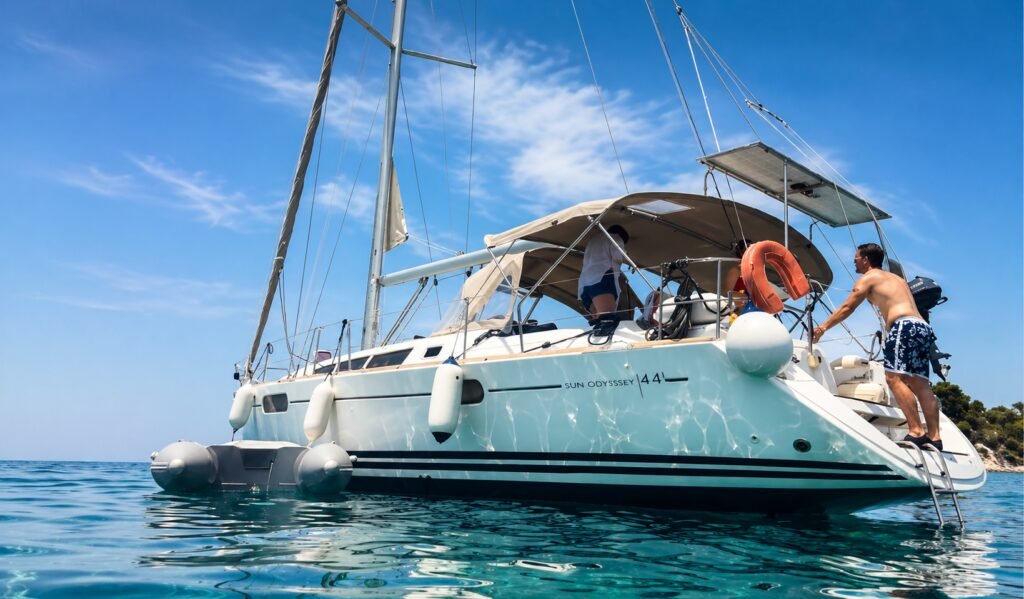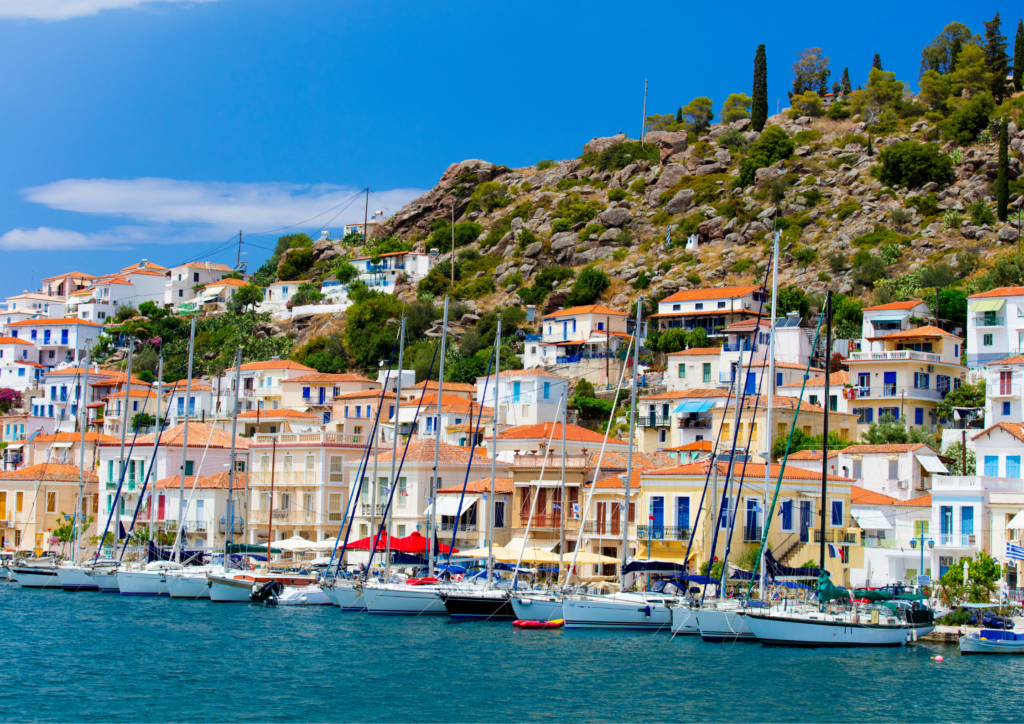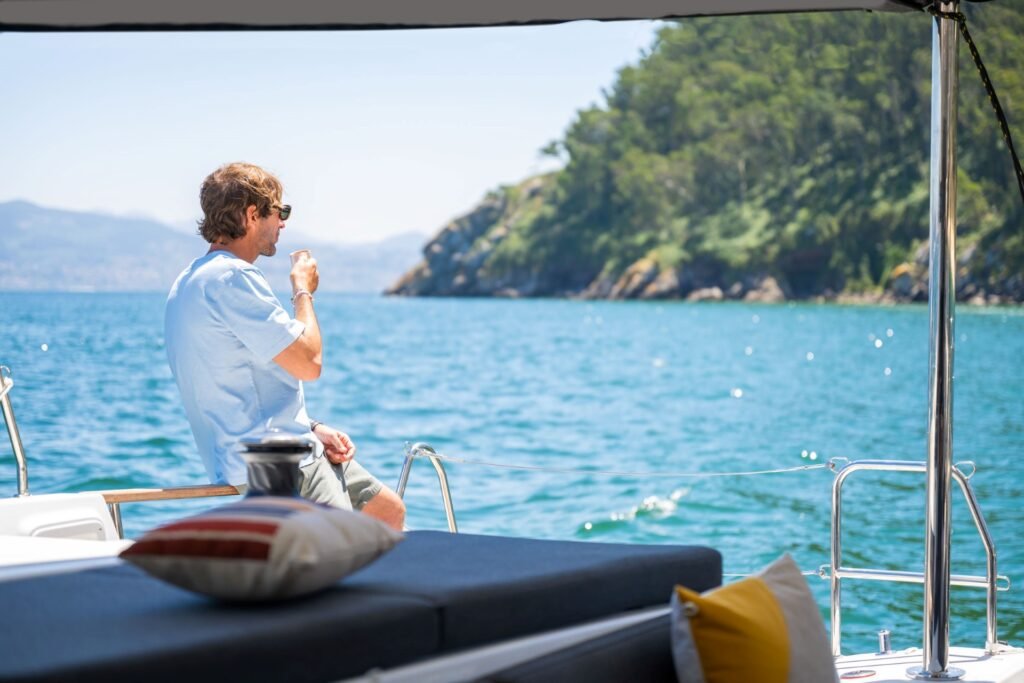
The packing question comes up in almost every pre-course conversation, and the answer always starts the same way: it depends on when you are coming. A week liveaboard in the Aegean in May feels quite different from the same week in August, and what you need in your bag reflects that. The common thread across all months is this — pack less than you think, pack soft bags rather than hard suitcases, and think about layers rather than bulk.
What this guide does not cover is specialist sailing equipment — that is handled in our full liveaboard guide. This is purely about clothing and everyday items, organised by the time of year you are sailing. Find your month, pack accordingly.
A Note on Bags
Before the lists: hard suitcases do not work on a sailing yacht. There is no storage space designed for rigid luggage, and a large hard-sided case will spend the week wedged awkwardly in a companionway causing problems for everyone. Bring a soft holdall or a duffel bag that can be compressed and squeezed into a locker. One bag per person, ideally no larger than 70 litres. Everything you need for a week fits in that.
April and May — Warm Days, Cool Evenings, Variable Conditions
April and May offer some of the best sailing in Greece — warm enough to be comfortable on deck, not yet hot enough to be oppressive. The days can reach 22 to 25°C by May, but the mornings and evenings are noticeably cooler, and a windy day on the water will feel significantly colder than the air temperature suggests.
Clothing
- 5 to 6 days of casual daywear — lightweight trousers or shorts, t-shirts and light long-sleeved tops
- A warm fleece or mid-layer — genuinely necessary for early mornings and cool evenings, not optional
- A light waterproof jacket — April in particular can bring short rain showers; May is drier but a layer against spray is still useful
- One slightly smarter outfit for evenings ashore — the harbour villages in May are quieter and the restaurants unhurried; it is worth dressing for dinner
- Swimwear — the water is around 18 to 20°C in May, which is swimmable if you are willing
- Comfortable shoes for walking ashore — the cobbled streets of Hydra and Poros reward flat, sturdy footwear
- A light scarf or buff — useful on deck in the mornings and evenings
What the weather actually feels like
Think of May as a warm British summer day crossed with occasional breezy afternoons. Layers that you can add and remove through the day are more useful than one heavy item. The sun is strong even when the air feels moderate — factor 30 minimum on deck, every day.
June — The Balance Point
June is the month where Greece tips from spring into summer. By the end of June the days are long, hot, and settled, and the Meltemi is beginning to establish itself. Daytime temperatures reach 28 to 30°C; evenings are warm and pleasant. This is the most forgiving month to pack for — the range of conditions is narrower than May or September and you are unlikely to be surprised by cold.
Clothing
- 5 to 6 days of casual summer clothing — shorts, t-shirts, light linen or cotton tops
- One light layer for evenings — a cotton sweatshirt or light long-sleeved shirt is enough; a heavy fleece is overkill
- A compact waterproof or windproof jacket — more for wind protection and spray on deck than for rain
- Swimwear — the sea reaches 22 to 24°C in June; you will swim every day there is an opportunity
- A sun hat with a brim — the June sun on the Aegean is serious; shade on deck is limited
- Comfortable shoes for shore
What the weather actually feels like
Hot by midday, warm in the evenings, occasionally breezy on the water. The Meltemi in late June can make afternoons on deck feel cooler than the thermometer suggests — a light layer in the cockpit is welcome when sailing in 15 to 20 knots. Pack for warmth on the water and heat ashore.
July and August — Full Summer
July and August are Greece at its most intense. Air temperatures regularly reach 32 to 35°C ashore, the sea is at 25 to 27°C, and the Meltemi blows consistently through the afternoons. On deck in a developed Meltemi you will not feel hot — the wind sees to that — but step ashore into the midday sun and the heat is immediate and significant. Pack for both.
Clothing
- 5 to 6 days of lightweight summer clothing — as light as you own; natural fabrics breathe better than synthetics in this heat
- A light long-sleeved shirt — essential for sun protection on deck during long passages; a factor 50 t-shirt is even better if you have one
- A compact windproof layer — not for warmth but for the Meltemi; 25 knots of wind feels cold when you are wet from spray
- Swimwear — bring two sets; they will be in constant rotation
- A sun hat — non-negotiable in July and August; a wide brim rather than a cap if possible
- Good quality sunglasses — the glare off the Aegean in full summer is extraordinary
- Light footwear for shore — sandals are fine for the islands in August
What the weather actually feels like
Hot ashore, surprisingly comfortable on the water when the Meltemi is blowing. The combination of strong sun and wind on deck means sunburn arrives faster than people expect — cover up more than you think you need to, particularly in the first two days before you adjust. Evenings are warm enough for dinner in a t-shirt well into the night.
September — The Best of Both
September is many people’s favourite month to sail in Greece, and it shows in the packing. The heat eases slightly from August’s peak — daytime temperatures settle around 27 to 29°C — the sea stays warm at 25 to 26°C, and the evenings become genuinely pleasant rather than just hot. The Meltemi becomes more variable, which makes the sailing more interesting and the conditions more changeable day to day.
Clothing
- 5 to 6 days of summer clothing — similar to June, light but with a slightly wider range
- A warm layer for evenings — by late September the evenings cool down noticeably; a light fleece or warm cotton layer earns its place in the bag
- A compact waterproof jacket — September can bring the first autumnal showers; a packable waterproof is worth having
- Swimwear — the sea in September is at its warmest and most inviting of the whole year
- A sun hat — still necessary, though the sun is less brutal than in July
- One smarter outfit for evenings — the islands in September are quieter and the restaurants excellent; it is a good month to dress for dinner
What the weather actually feels like
Early September feels like a slightly gentler August. Late September starts to feel like early June — warm, varied, occasionally surprising. Pack a slightly wider range than you would for July and you will be comfortable throughout.
October — Prepare for Real Weather
October is for sailors who are not put off by the possibility of an unsettled day. Between the fine spells — and there are many — the sailing is often outstanding. But October can also bring cooler temperatures, stronger winds, and short periods of rain. Pack for a range, not for guaranteed summer.
Clothing
- A mix of summer and autumn clothing — some shorts and t-shirts for the warm days, some warmer layers for when the weather turns
- A proper warm mid-layer — a substantial fleece rather than a light cotton sweatshirt; October evenings on the water can be genuinely cold
- A waterproof outer layer — rain is a realistic possibility in October and a good waterproof jacket is worth the space in the bag
- Long trousers for evenings and cooler days — shorts alone will not cover you in October
- Swimwear — the sea is still 22 to 23°C in October and swimming is absolutely possible on the warmer days
- Warmer footwear for shore — closed shoes rather than sandals for the evenings
What the weather actually feels like
Unpredictable in the best sense. A fine October day in the Aegean is one of the most beautiful sailing experiences the season offers. Come prepared for variation and you will enjoy whatever the week produces.
March — The Season Begins to Stir
March is the earliest month we run courses and it is firmly for sailors who know what they are signing up for. The Aegean in March is quiet, often beautiful, and genuinely cold by Greek standards. Daytime temperatures sit around 14 to 17°C, evenings drop to single figures, and the sea is at its coldest of the year at around 15 to 16°C. Swimming is for the very committed. The sailing conditions are variable — calmer than the height of summer in some respects, but with the possibility of stronger unsettled weather that the summer months rarely produce.
Clothing
- Warm layers throughout — think autumn in northern Europe, not Mediterranean spring
- A substantial fleece or insulated mid-layer; thin cotton sweatshirts will not be enough
- A good waterproof outer layer — rain is a realistic daily possibility in March
- Long trousers for every day on deck and ashore; shorts are largely redundant
- Warm socks — feet get cold on a boat in March in a way that surprises people
- A warm hat and gloves for early mornings and night watches
- Closed, water-resistant footwear for going ashore
- One or two lighter items for the warmest afternoons — a t-shirt under layers is practical
What the weather actually feels like
Cold in the mornings, pleasantly mild on a good afternoon, and very cold once the sun goes down. The light is extraordinary in March — clear, low, and long-shadowed — and the islands are completely to yourself. Pack as you would for a cool autumn sailing trip in the UK and you will be comfortable. Pack for Greece and you will spend the week cold.
November — The Season Winds Down
November is the mirror of March — the sailing season closing rather than opening, with similar conditions and a similar mindset required. Daytime temperatures drop to 16 to 19°C in early November before falling further toward the end of the month. The sea stays warmer than the air — around 20 to 21°C in early November — which makes the temperature on the water more comfortable than you might expect. The anchorages are completely empty. The harbour villages have returned to their local rhythms. It is a very different Greece from the one that exists in July.
Clothing
- A full range of layers — early November can still produce warm afternoons; late November will not
- A warm mid-layer — a proper fleece rather than a light cotton layer
- A waterproof outer jacket — November rain is common and can be heavy
- Long trousers for most days, with a pair of shorts available for the warmer early-November afternoons
- Warm socks and closed footwear for evenings and cooler days
- A warm hat and gloves for night passages and early mornings
- Swimwear — the sea in early November is still genuinely swimmable if the sun is out
What the weather actually feels like
Early November feels like a cooler extension of October — changeable, occasionally very fine, occasionally wet and blustery. Late November is properly autumnal. The sailing in between can be exceptional. Pack a wider range than you would for any summer month and be ready to use all of it.
The One Thing Every Month Has in Common
Sunscreen. The Aegean sun is stronger than it looks and reflects off the water in a way that accelerates burning regardless of the time of year. Factor 30 minimum for every day on deck, factor 50 for July and August and for anyone with fair skin. Bring more than you think you need — it runs out faster than you expect when you are applying it properly.
For everything else about preparing for your liveaboard week — what the course looks like day by day, what to expect from the boat and the group — read our complete liveaboard guide. And if you are still deciding when to come, our month-by-month sailing season guide covers exactly that.
→ Any questions before you book? Talk to one of our experts.